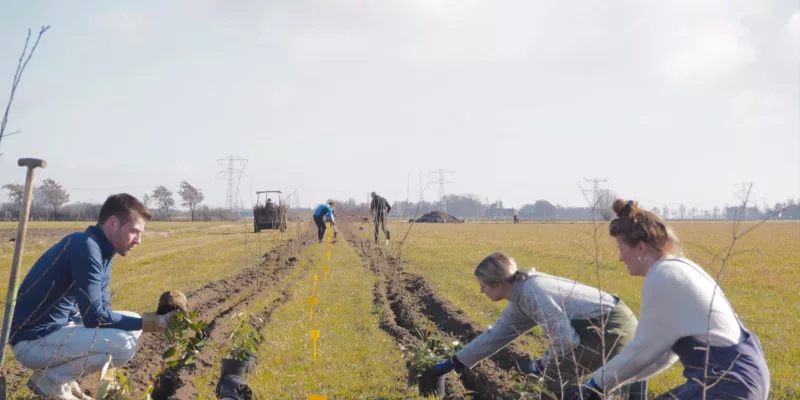
Trees for All supports the planting of food forests across the Netherlands. Together with Stichting Voedselbosbouw Nederland and local farmers, we plant edible forests filled with food-producing trees and shrubs. Good for the climate, biodiversity and our environment!
Status: Current project
Forests where food and nature thrive together
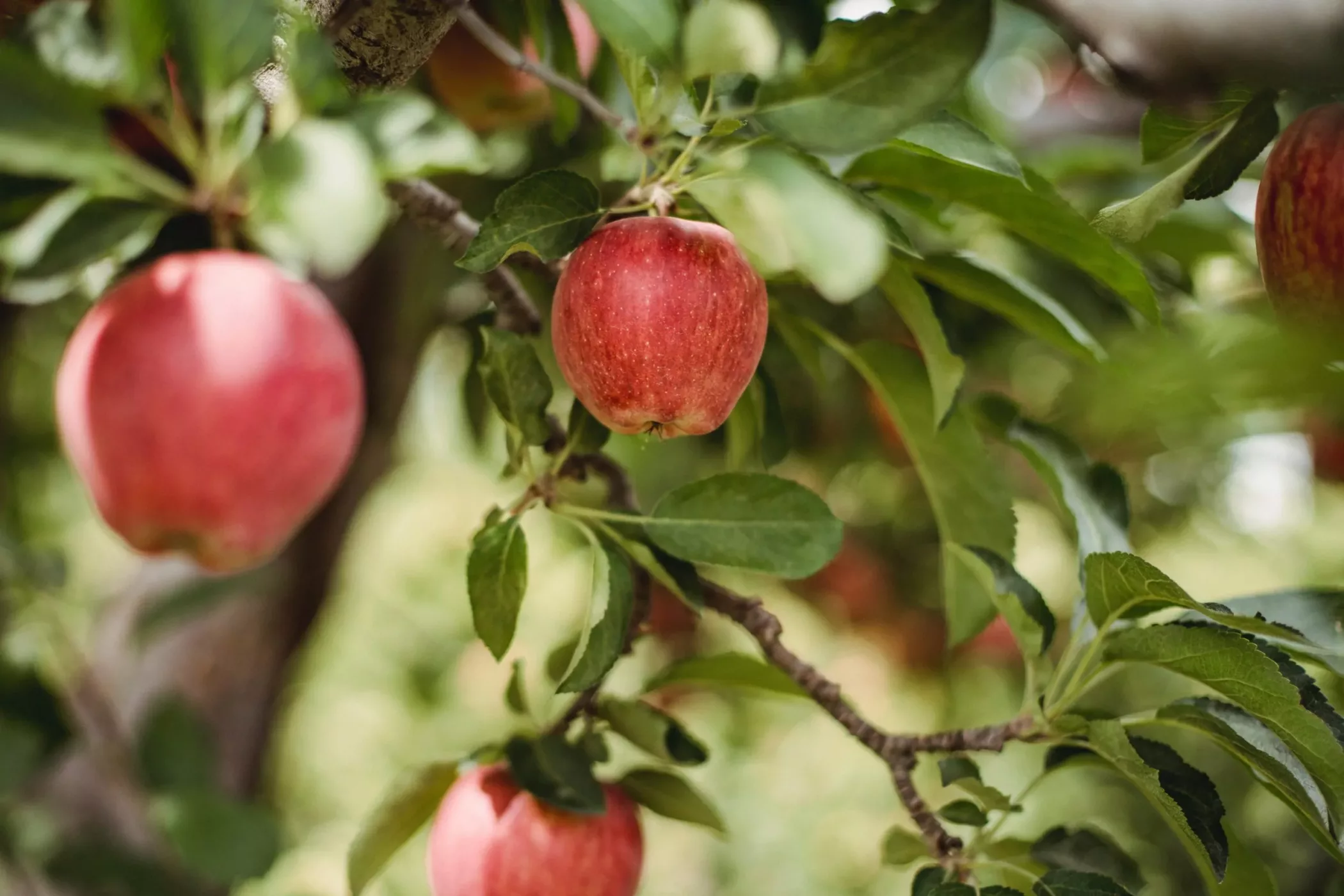
Imagine a forest where birds, insects and other wildlife can thrive, and where food grows in abundance. Apples, pears, hazelnuts, berries, mushrooms and much more. That’s a food forest!
Food forests are a form of nature-friendly farming. Instead of growing a single crop, a variety of trees, shrubs and plants grow together. Depending on the season, there’s always something different to harvest. And best of all? Once planted, a food forest largely takes care of itself, without the need for fertilisers or chemical pesticides.
An ‘edible forest’ doesn’t just provide food. It also helps increase biodiversity, absorb CO2, provide shade and cooling, and maintain healthy soil. That’s why Trees for All supports farmers across the Netherlands in planting food forests. Thanks to your donation, we can help even more of them grow!
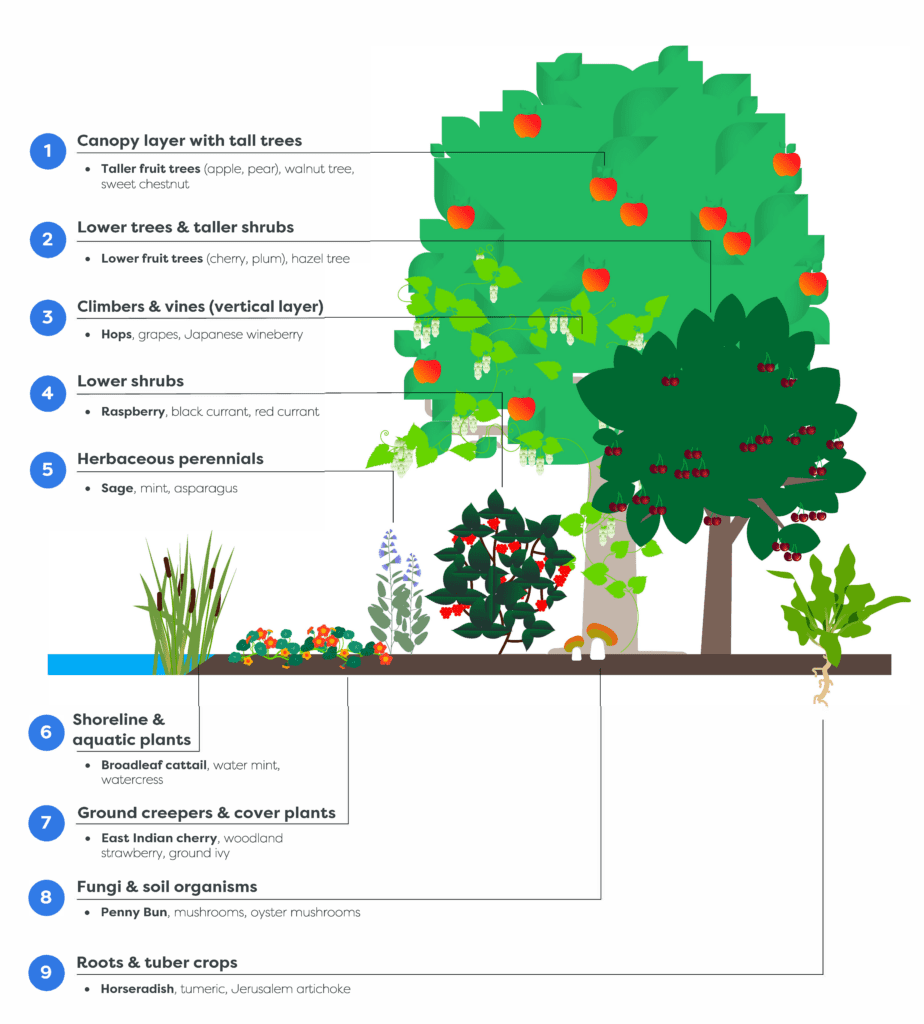
A food forest consists of different layers, just like a natural forest. Tall trees, such as walnut and chestnut trees, grow at the top. Below them are smaller trees, including hazels and fruit trees. Closer to the ground, you’ll find berry bushes, herbs and all kinds of edible plants. By combining plants and trees of different heights, a food forest can support an enormous variety of species and produce on a relatively small area of land. It also provides a home for all kinds of animals and insects. So, it’s a multifunctional forest where nature and food production go hand in hand!
The benefits of food forests
Food forests help to improve the climate, increase biodiversity and create a healthy living environment for people. For example, they provide:
Delicious, healthy food: locally grown vegetables, fruit, nuts and berries.
More biodiversity: a food forest provides a habitat for all kinds of plants, birds, insects and other animals.
Carbon storage: thanks to the trees and shrubs that grow in a food forest.
Healthy soil: the planting helps create fertile, living soil that retains water more effectively.
A stronger connection with nature: food forests give people of all ages the chance to discover where our food comes from.
A healthy and green living environment: trees help clean the air and provide shade and cooling on hot days.
A nature-friendly way of farming
Food forests are a form of nature-inclusive farming. This means that farmers work with nature as much as possible. They minimise soil disturbance, allowing healthy soil life to develop and helping the ground retain water.
Chemical pesticides are not needed either. Different plant and animal species support one another, helping to keep diseases and pests under control naturally. The result is a self-sustaining ecosystem that relies on its own natural processes as much as possible.
A food forest is also a wonderful place for visitors to explore. You can go for a walk, learn more about food from nature and, of course, taste all the delicious things growing in the forest. A climate-friendly alternative to conventional farming!
Our partners
When planting food forests, we work with local food forest farmers across the Netherlands. Besides that, Stichting Voedselbosbouw Nederland (Dutch Food Forestry Foundation) is involved. This Dutch foundation is dedicated to developing food forests that provide farmers with a sustainable livelihood. Its aim is to create a future with delicious, healthy, locally grown food, more nature and attractive landscapes!
Stichting Voedselbosbouw Nederland also created an informative video about food forests: