

0
trees and shrubs

0 − 0
planting period

0
landowners are joining us
Why is the restoration of landscape elements necessary?
The Landschap Overijssel foundation aims to boost the landscapes in the province by constructing and restoring landscape elements. This is important for the climate, for biodiversity and for people.
1. A better climate
Landscape elements help capture and store CO2, contributing to a climate-resilient landscape. Trees, shrubs and other vegetation absorb and store carbon. They also provide shade and cooling, while helping to improve water management in the area. In addition, landscape elements capture particulate matter and nitrogen, helping to improve air quality.
2. More biodiversity
During the past few decades, biodiversity in the Netherlands has decreased significantly. To illustrate, the number of insect species has decreased with 70%. And it’s not only insects that are going through a tough time, but birds, mammals and fish are suffering as well. Landscape elements have the power to change this: plants and animals are able to find shelter, food and the possibility to procreate here. Through the construction and restoration of landscape elements, plants and animals will be able to return to the countryside.
3. A healthy environment
e plant landscape elements on land owned by farmers and private individuals. Many farmers in rural areas are keen to make their land greener, but when it comes to putting those plans into practice, they can use some support. We help them get started by developing plans that clearly outline which trees and shrubs they can plant and how to manage them.
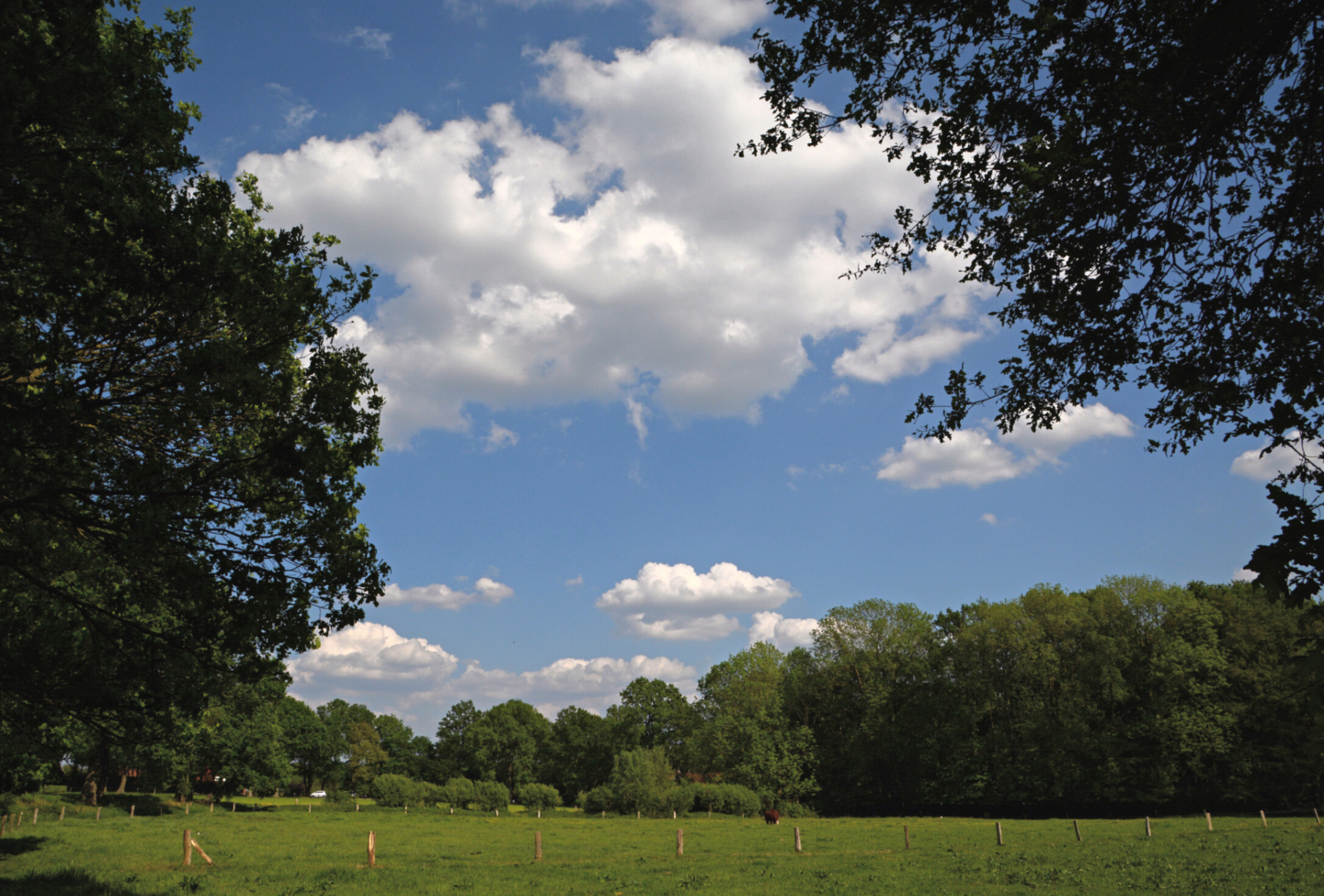
Because ultimately, we all benefit from this. A greener and more diverse landscape provides shade and cooling, helps retain water, contributes to a healthy living environment, and creates space for plants and wildlife. It also makes the landscape of Overijssel a more attractive place to live, work and enjoy recreation.
Our way of work
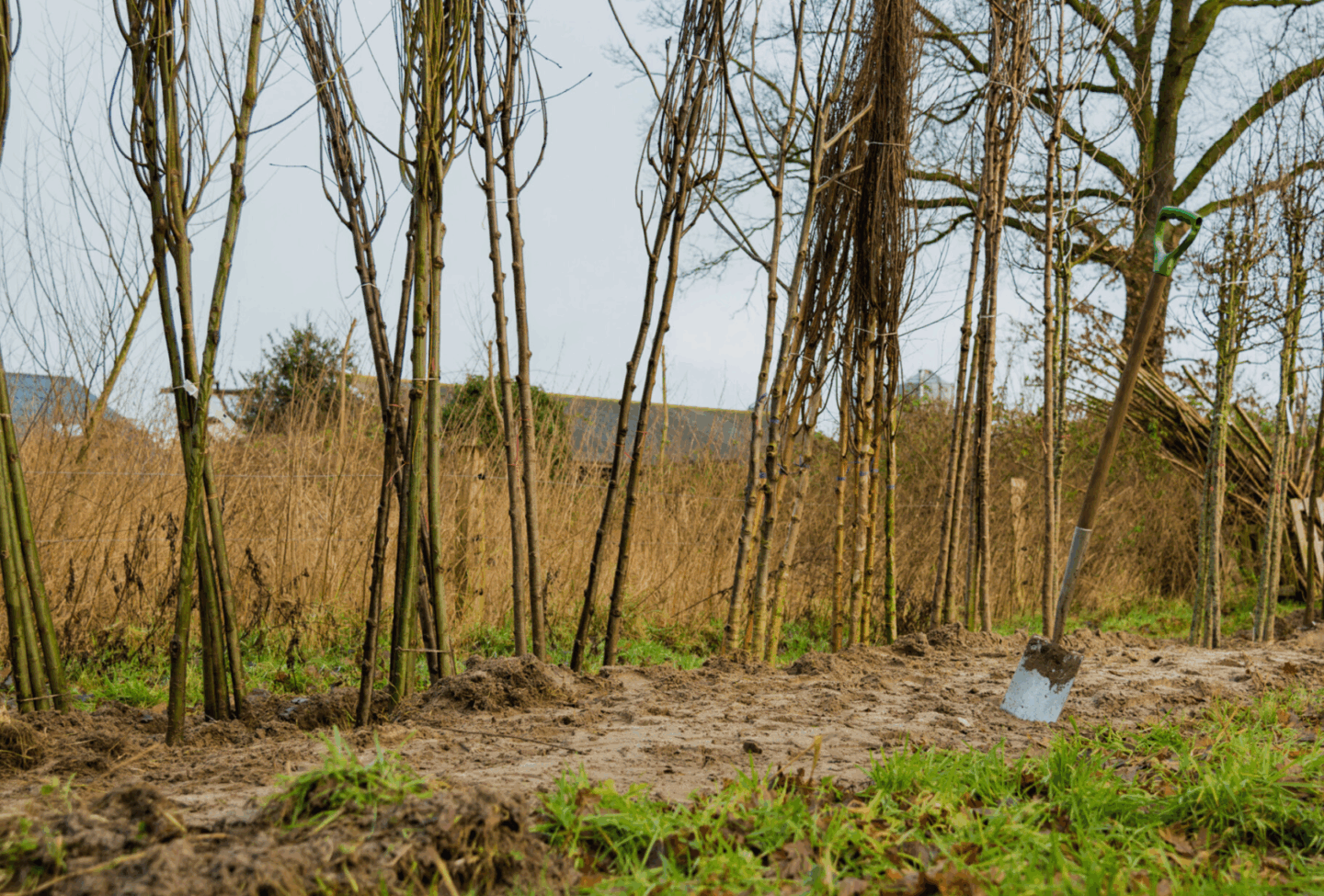
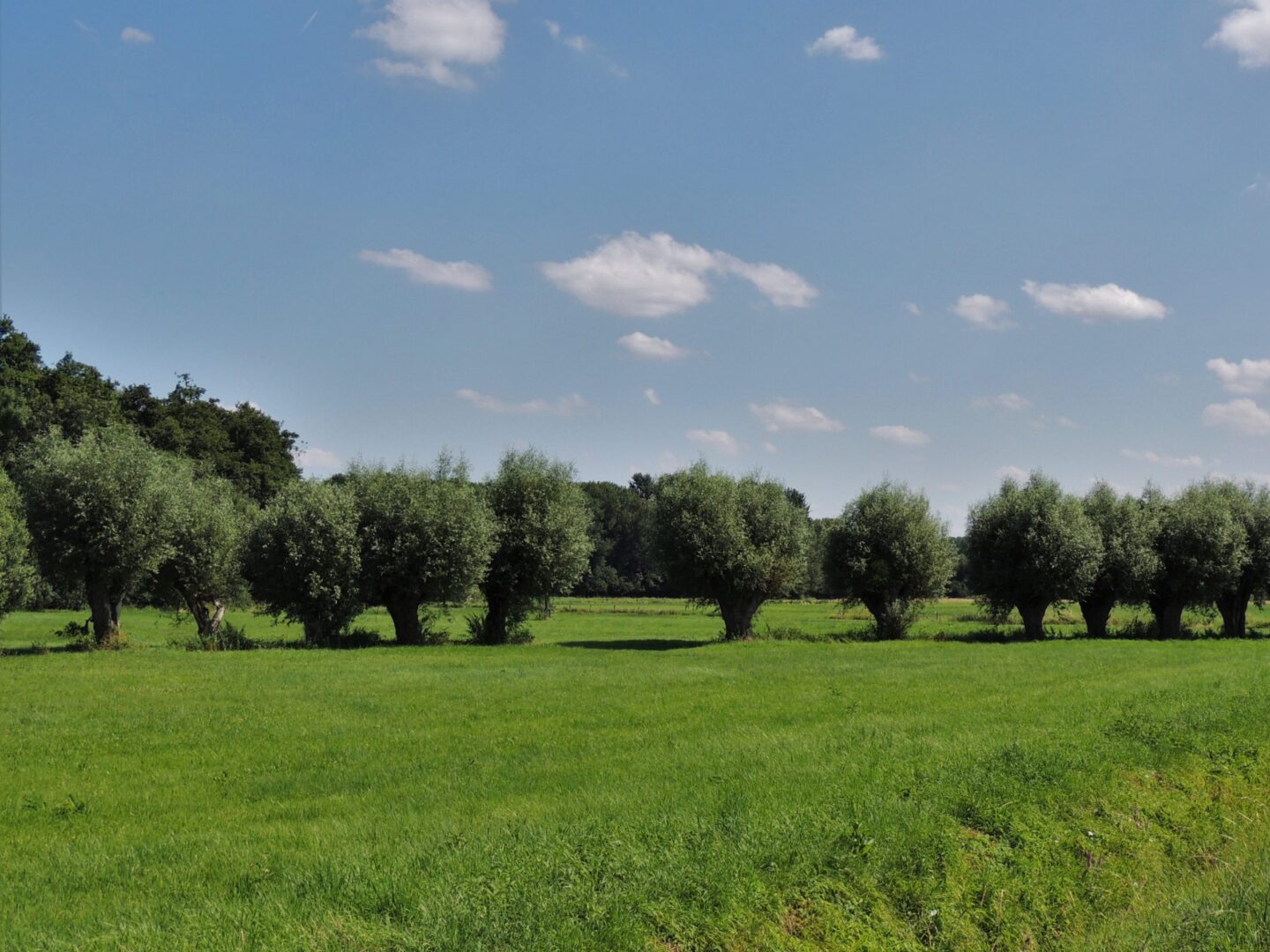
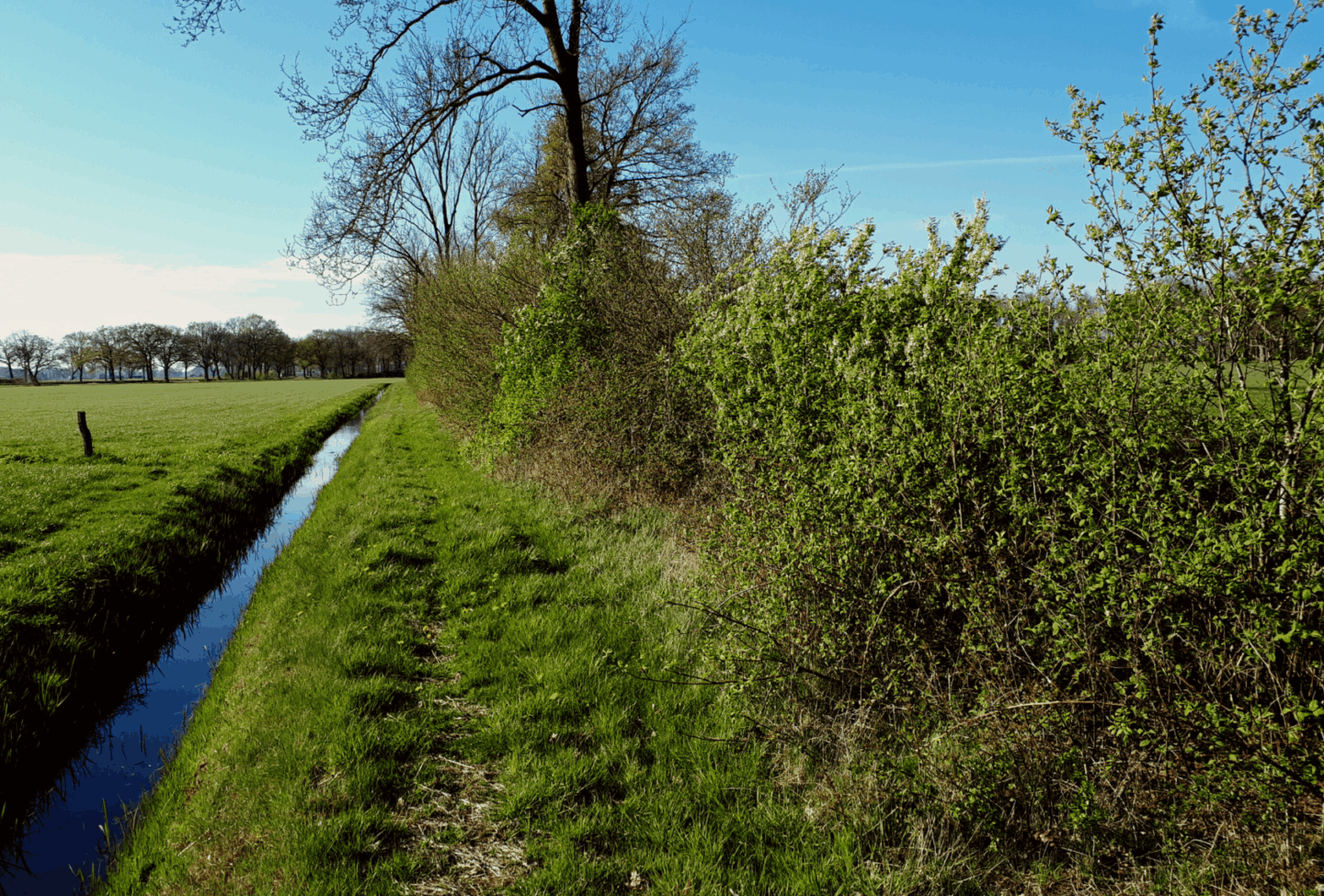
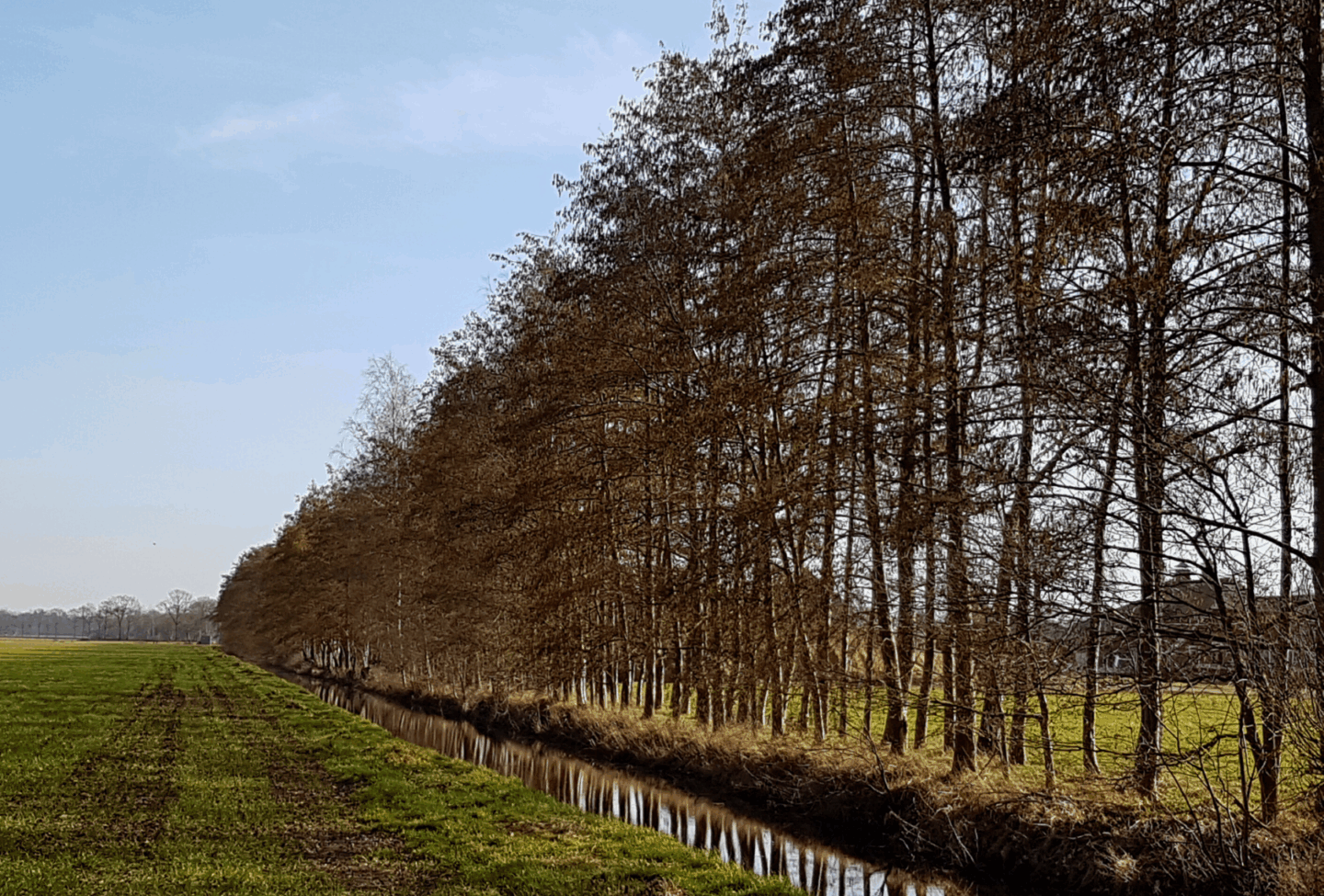
Across the entire province of Overijssel, we’re going to plant and restore landscape elements. We’ll do this on the land of hundreds of farmers and private owners. We fill in the gaps in existing landscape elements and plant trees and shrubs among existing green. For instance, this is how an empty row of trees is able to transform into a full windbreak that attracts various plants and animals!
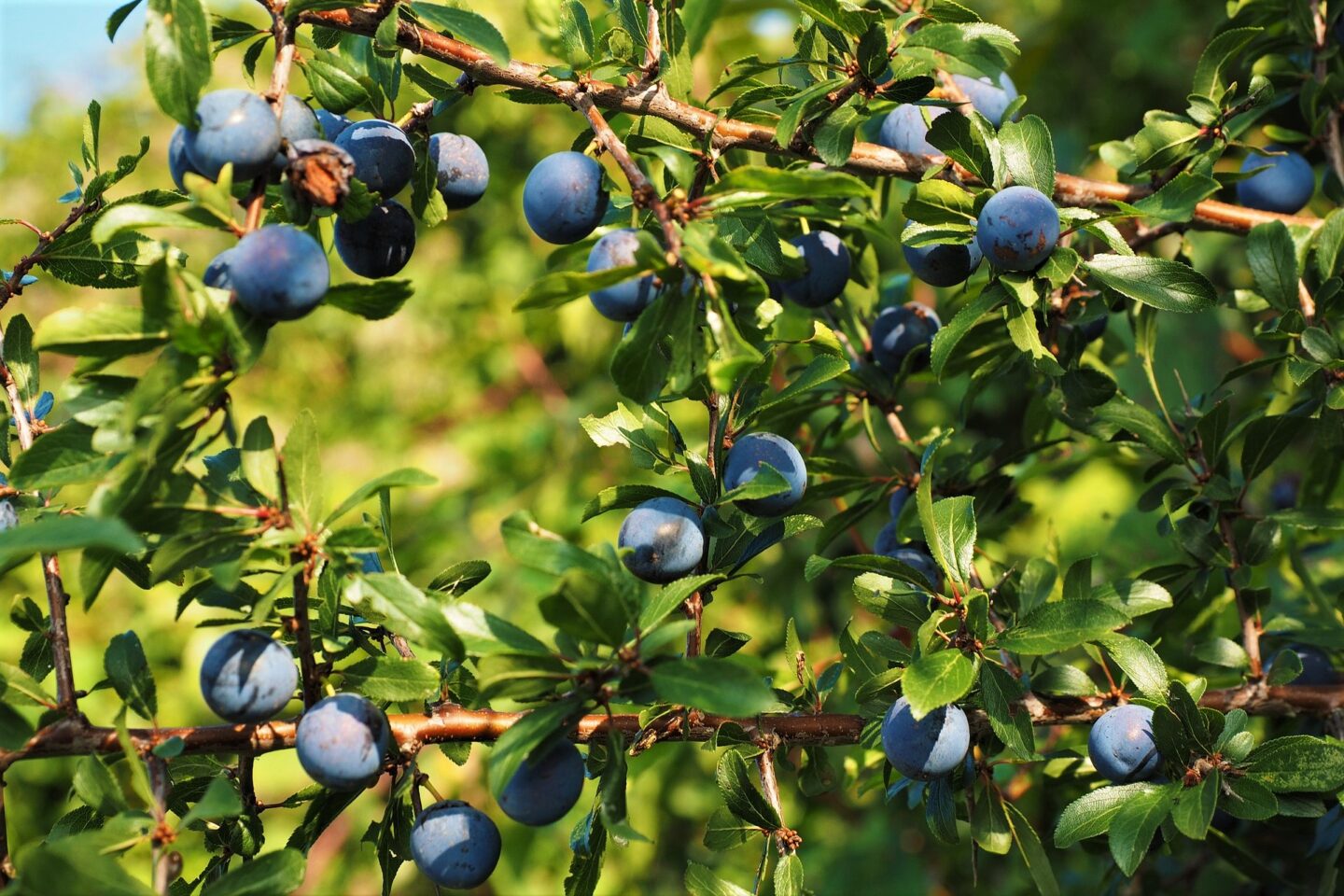
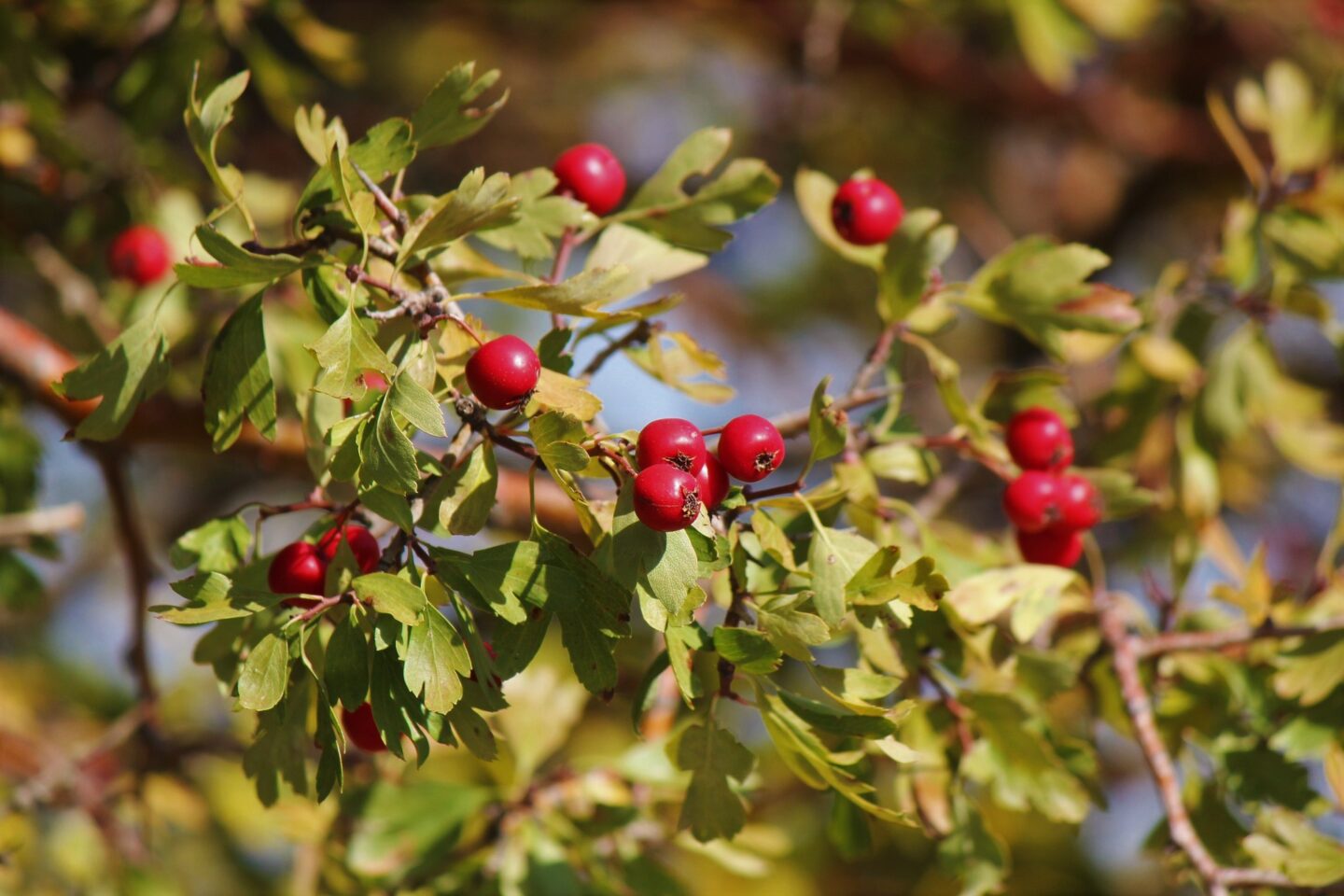
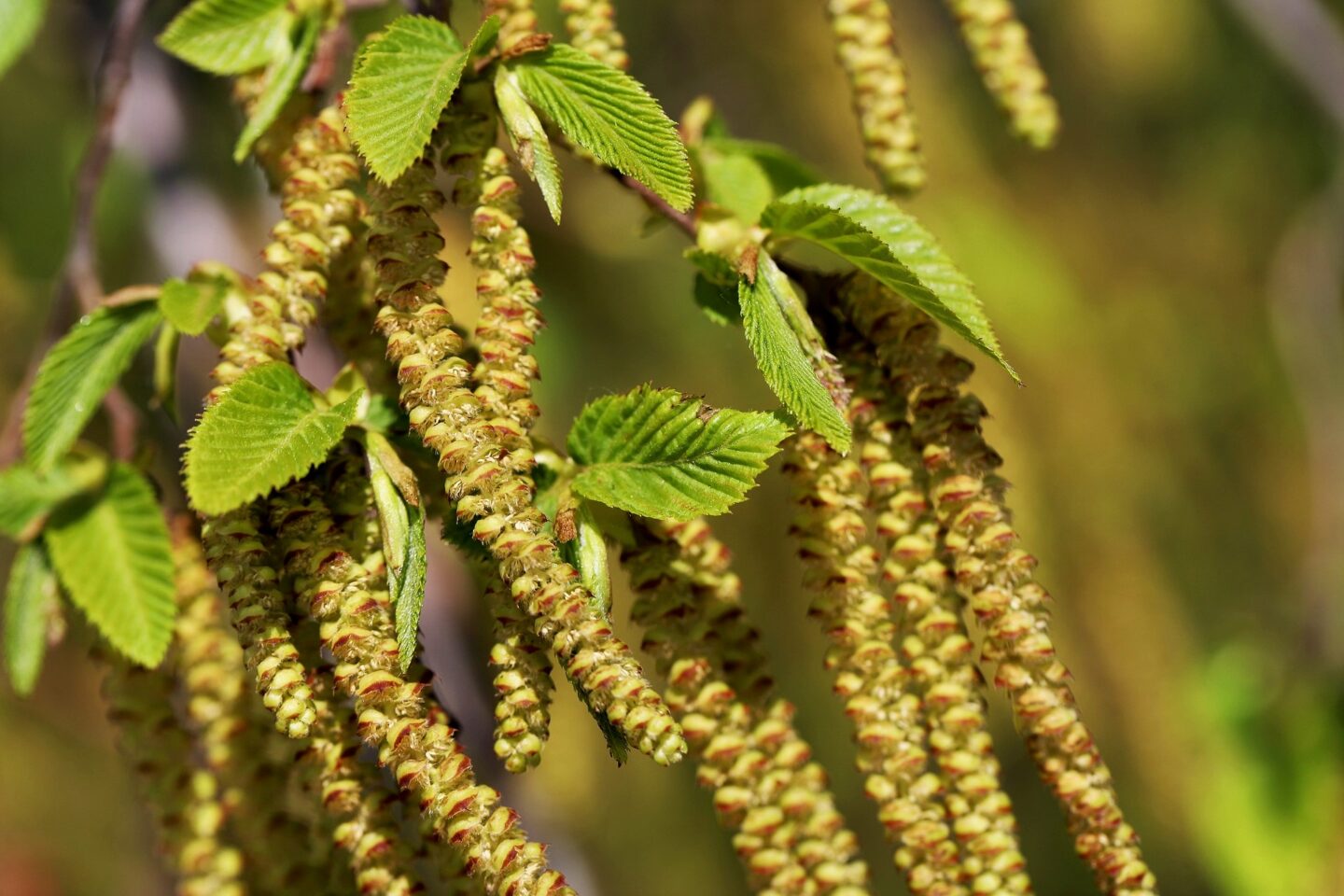
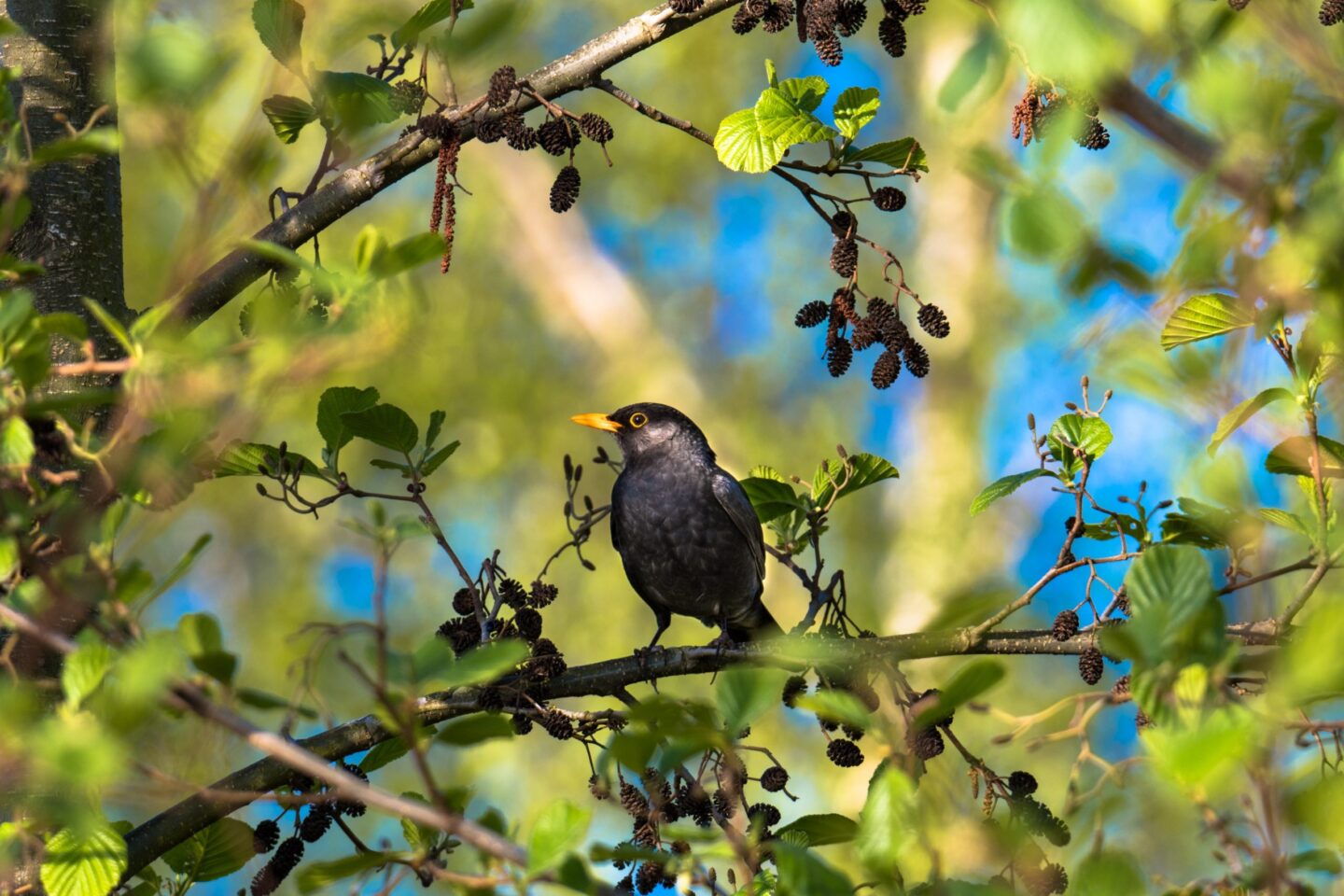
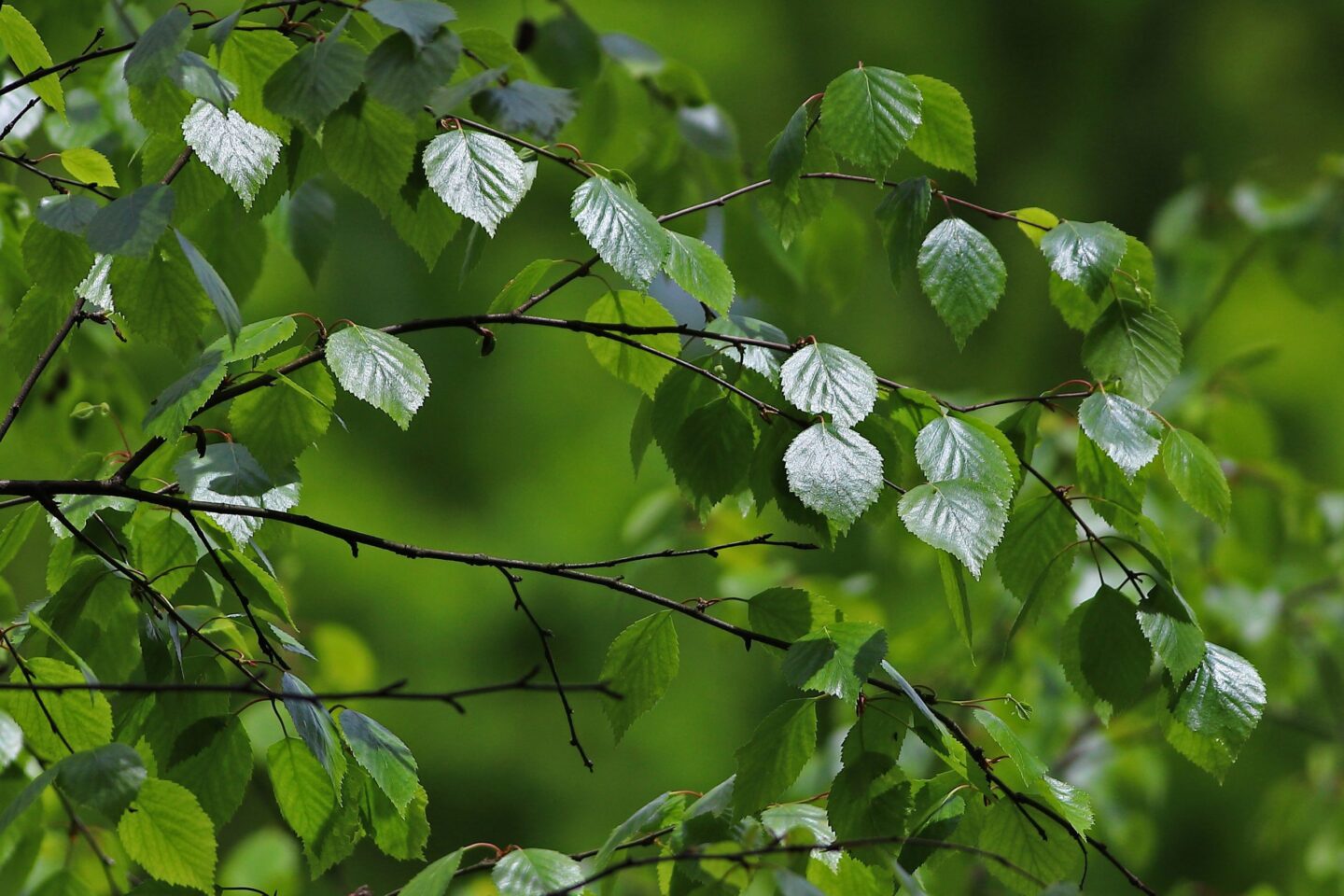
We plant local and indigenous trees and shrubs, such as European alder, European birch, downy birch, hornbeam, hawthorn, blackthorn, bird cherry, sessile oak, European buckthorn and willow. These are species of trees and shrubs that naturally grow in this area, supplemented by species that are important for the local area from a cultural heritage perspective.
News from Overijssel
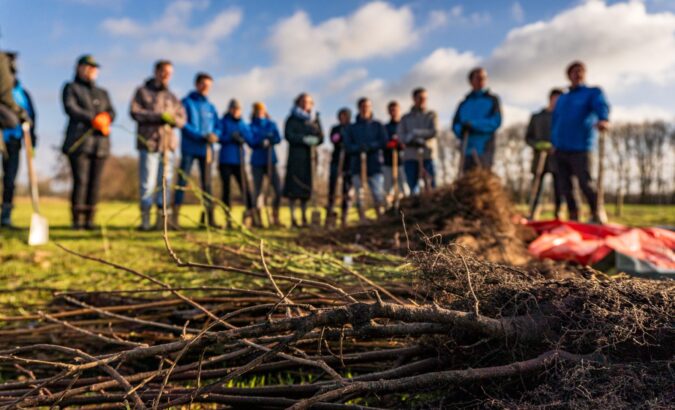
More than 70,000 trees for a greener Overijssel: results for 2024-2025
Together with Landschap Overijssel, we are greening the countryside! Thanks to our donors, we planted no fewer than 70,580 trees and shrubs last winter. This enriches the landscape with hedges, wooded banks and rows of trees throughout the province. In this way, we are making Overijssel greener, more biodiverse…
Read the story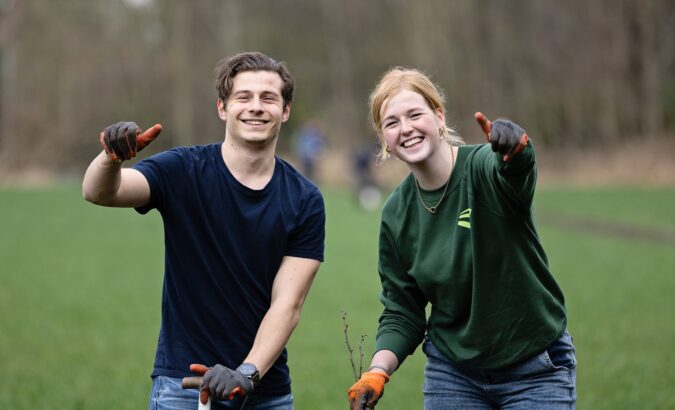
Towards a green and sustainable countryside in Overijssel: results 2023-2024
In partnership with Landschap Overijssel, we’re greening the countryside in Overijssel. In total, we’re planting 290,810 trees and shrubs throughout the province. By planting landscape elements, we’re reinforcing the unique Overijssel landscape, as well as the habitats of numerous plants and animals. 0 trees…
Read the storyThis project from Trees for All contributes to multiple Sustainable Development Goals.

Where are we going to plant?
We plant in the entire province of Overijssel, on the land of farmers and private owners.
Our partners
For this project, we cooperate with the organisation Landschap Overijssel, the province of Overijssel and private landowners. Landschap Overijssel takes the role of initiator, leader and consultant for this project. In addition, the province of Overijssel and various municipalities are involved in co-funding. Lastly, we cooperate with landowners that provide their land. They contribute their own financial contribution for the project and plant and manage the trees and shrubs.

“Landscape elements such as windbreaks, ditches and rows of trees form an indispensable green-blue network. Together, they are an important foundation for biodiversity. That’s why we are aiming for the green-blue veining of the landscape”.
Eibert Jongsma, Landschap Overijssel