Je bent nu op de Engelse pagina. Wil je naar de Nederlandse pagina? Klik dan hier.
bomen-planten-ethiopië

Ethiopia (CO2-compensation)

Trees for All supports the EthioTrees project to help communities make the switch to agroforestry. This is a sustainable alternative to traditional farming and contributes towards fertile soil and greater guarantee of food.

Status: Current project

Agroforestry in the Tigray highlands

Planting trees for greatercertainty of food in Tigray. That is what Trees for All, EthioTrees and Climate Lab are devoted to. As a result of deforestation and intensive farming, Tigray has less and less fertile ground available in which to produce food. The region is also vulnerable to the effects of climate change, such as increasing drought. This renders the residents strongly dependent on imported food.

We can break this vicious circle by offering the inhabitants a sustainable alternative to conventional agriculture. For this reason we help communities make the switch to agroforestry (forest farming). Communities plant indigenous and regional trees in their grounds, interspersed with all sorts of crops.

Trees and crops contribute to a better climate and greater biodiversity. They stimulate healthy and fertile soil which holds water better. The crops also provide varied harvests and more diverse incomes. As a result, people become more independent and efficient towards climate change.

Calculate your CO2 emissions

Via Trees for All, you can calculate your personal CO2 emissions: as an individual or as a company. You can offset your remaining emissions through our certified forest projects, such as this project in Ethiopia. This way, we can involve more families in Ethiopia in the project and plant more trees together.

Start now
icon-moederboom

0

trees will be planted

0

hectares of land

icon-boeren

0

farmers participating

icon-CO2-wolkje

0

tonnes of CO2

icon-aanplant

0 0

planting period

Why this project is very necessary

The lack of fertile ground is a huge challenge in Tigray. Centuries of intensive farming have left the soil drier and drier and vulnerable to erosion. What is more, for agriculture people strongly depend on rain. Precipitation becomes ever more unpredictable as a result of climate change, such as increasing drought.

Because of the combination of degraded grounds and vulnerability towards climate change, people are strongly dependent on imported food. Add to this that in 2022 – 2022 the region was hit by civil war, one of the worst humanitarian disasters of our time. For a long time, Tigray was cut off from the outside world, which caused gigantic food scarcity.

Climate change, drought or future conflicts cannot be erased in the wink of an eye. But it is possible to make people in the region more efficient  towards such circumstances. How? By enabling them to produce their own food in sustainable ways. And that is exactly what can be done by supporting the EthioTrees project!
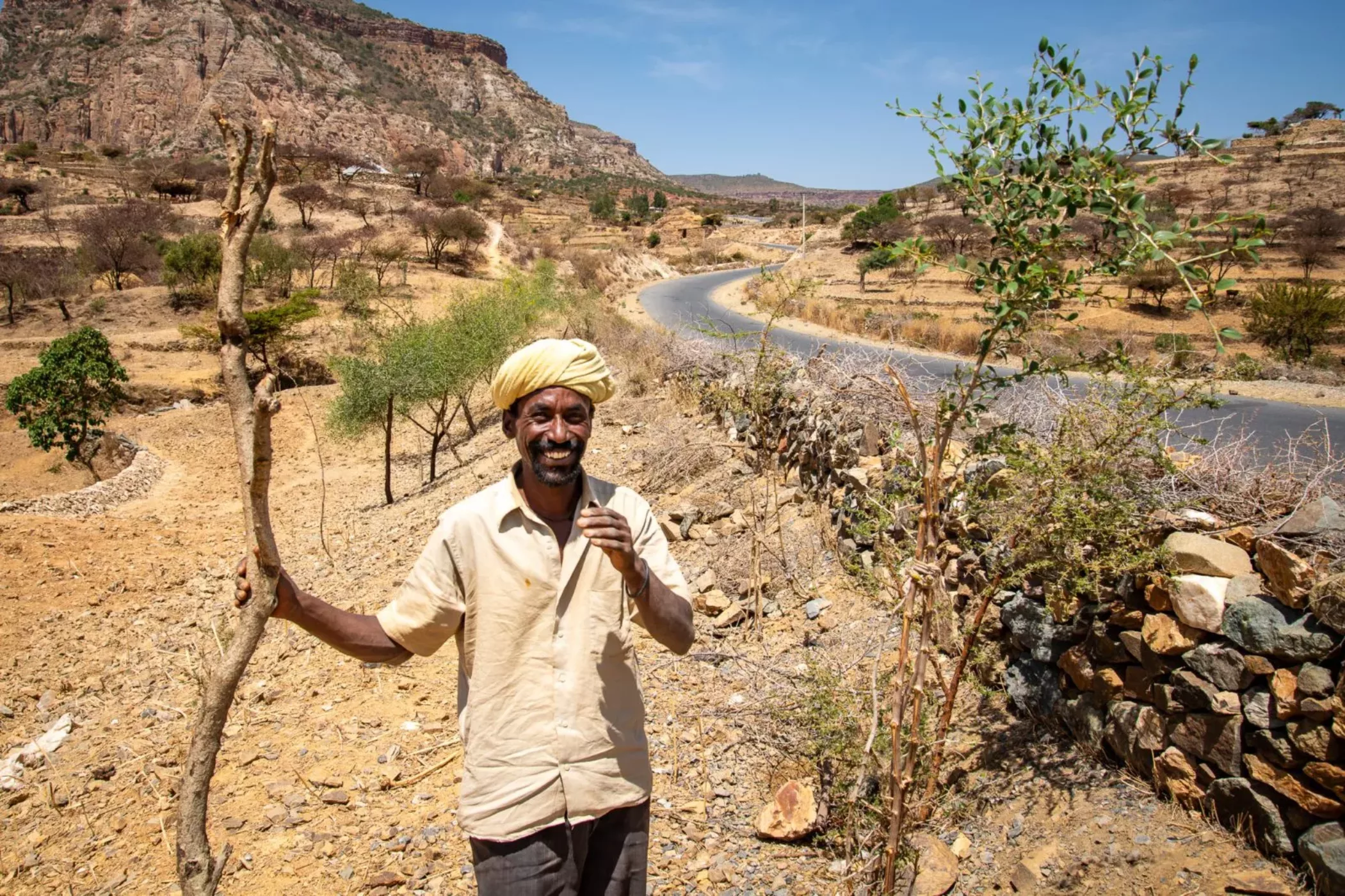
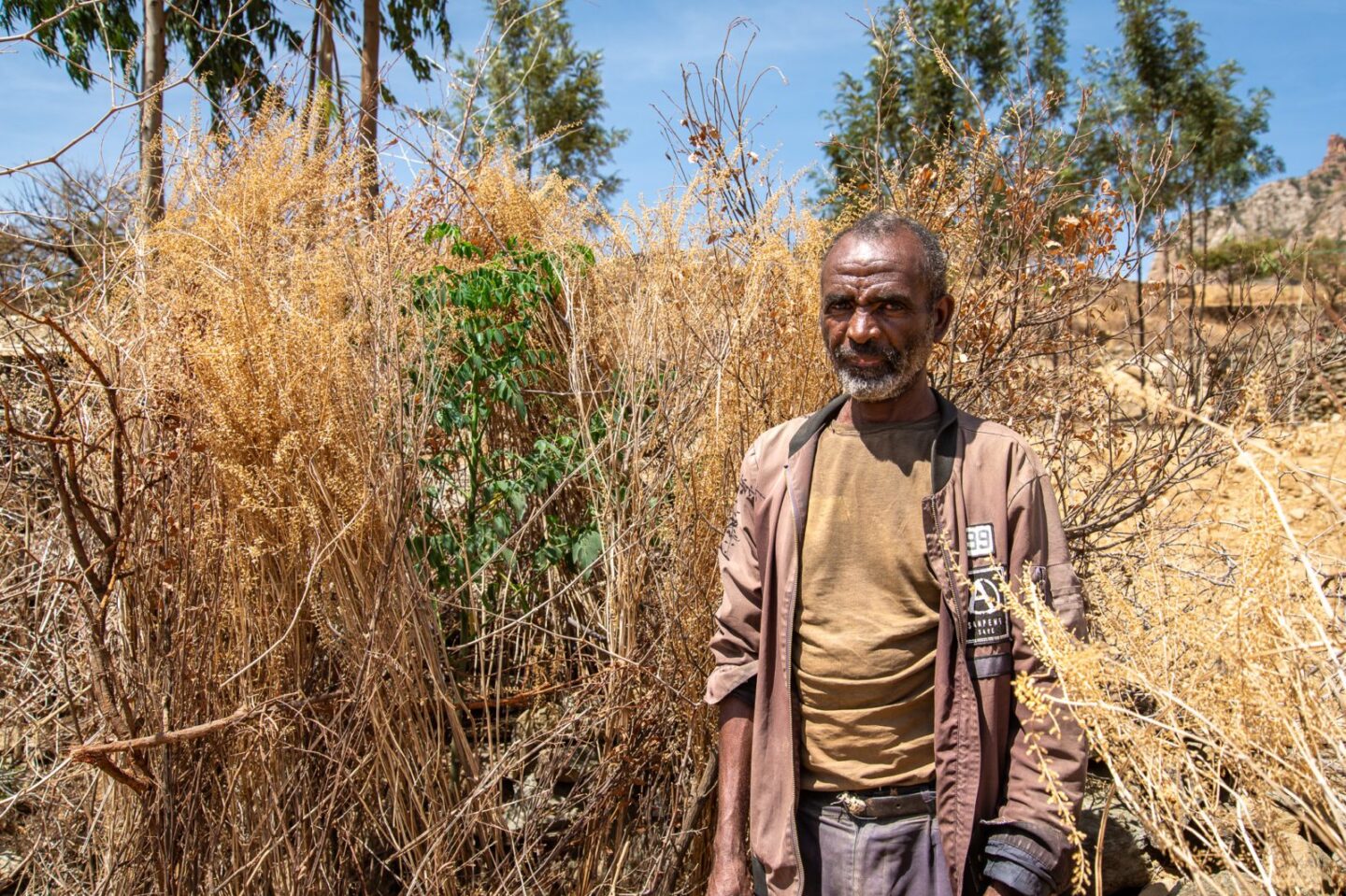
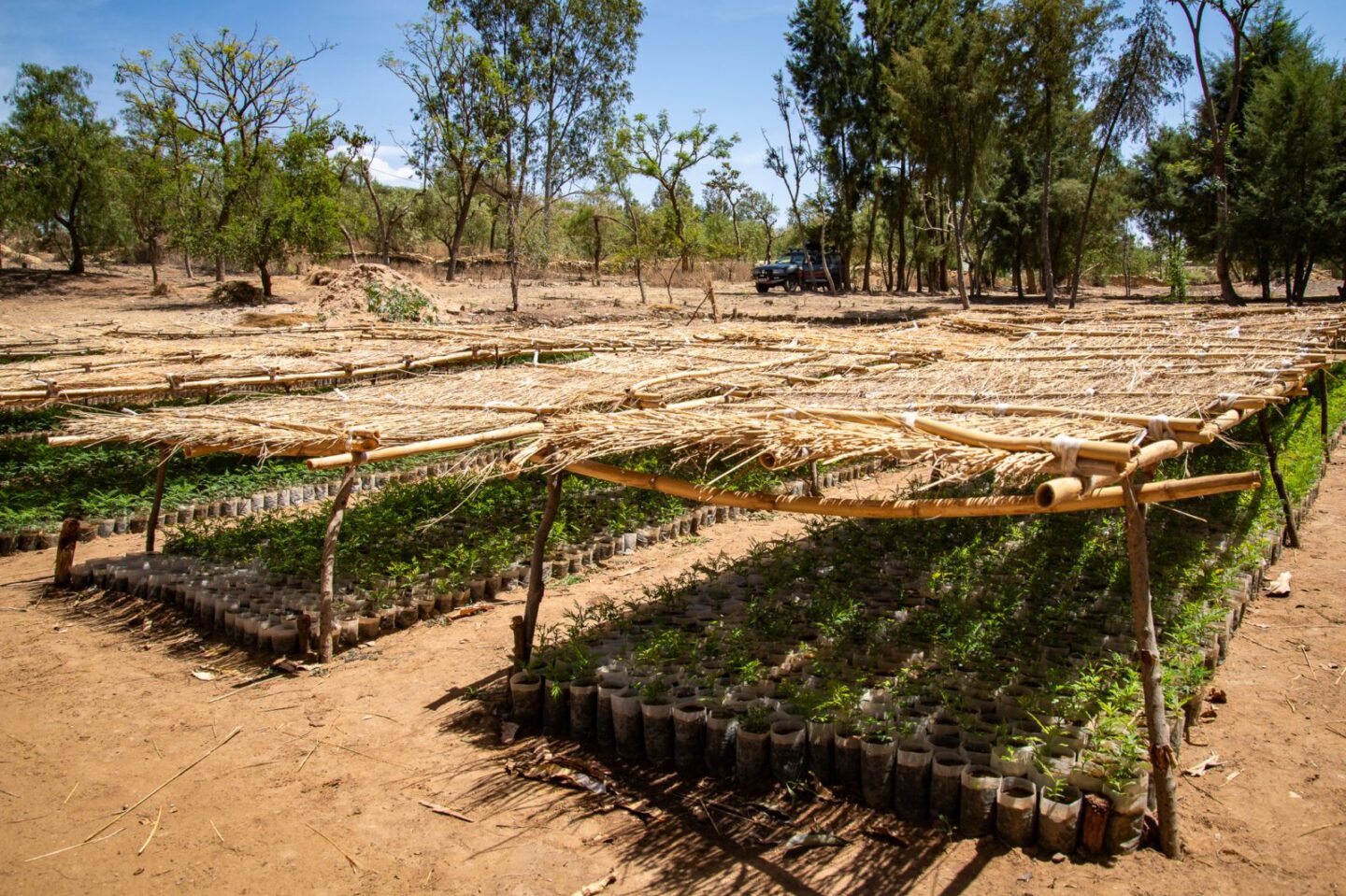
Project participants of EthioTrees. They are seen among the newly planted young trees, which are protected from the sun by twigs.

  • The trees provide strong and fertile soil, which stores water in a better way, keeping the soil together, as it were. The risk of erosion decreases and water becomes more readily available.

  • The certainty of food increases. Because communities grow several types of crop, their harvest is more diverse and their income more stable. Is one crop having a hard time? There are enough other crops to take its place. The availability of food makes communities less dependent on imported food. This way they are much more self-sufficient in good times and in bad times.

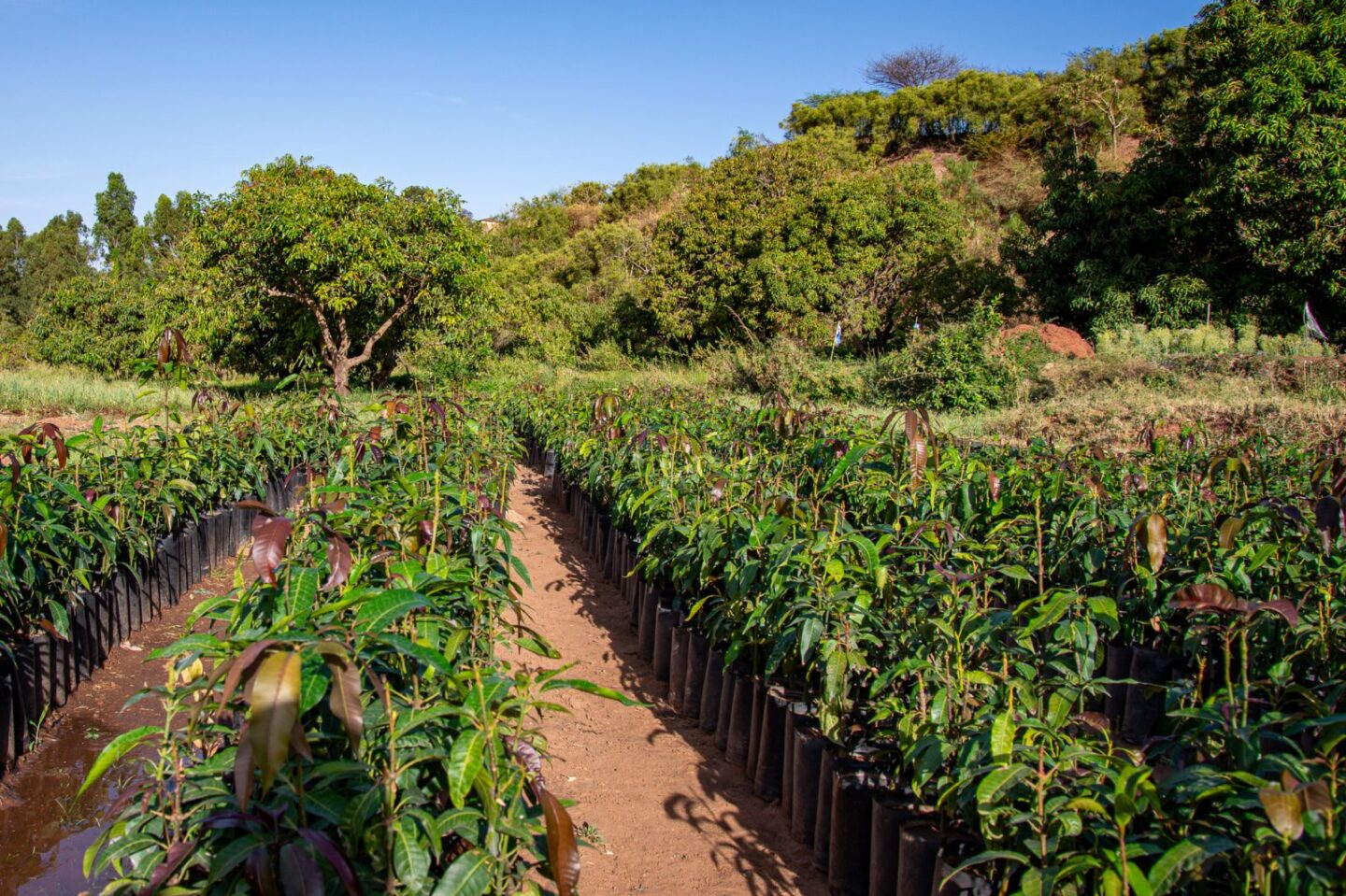
  • Apart from the crops, the trees also give several products. In the near future people will literally pick the fruit off orange and mango trees. The leaves of Moringa trees are excellent tea material. Foliage will serve for fodder and prunings for fuel.

  • Trees and crops provide shade and cooling: their contribution to a favorable micro-climate and the fight against drought.

  • Trees and crops will attract all sorts of plants and animals, such as birds and insects. Good for increasing biodiversity.

  • Trees and crops absorb CO2. Their way of contributing to a better climate and countering further global warming.

bomen-kwekerij-ethiopie

Integral approach

The switch to agroforestry is part of the EthioTrees project, started as early as 2016. In that year, participating villages in Tigray began restoring pieces of communal land (exclosures) in order to get nature going again. In those exclosures, farming and grazing are not allowed. Besides, communities dug infiltration ditches in them and planted trees. The result was that nature recovers little by little.

Additionally, participants would like to set up agroforestry: an age-old tradition in the area. For many people, it was financially difficult to invest in trees, partly as a result of the war. They needed more technical knowhow as well. Your donation enables us to help more farmers get starting. A valuable addition to restoring nature.

Here grow the trees

The project is situated in Tembien Highlands, in the central zone of Tigray, Ethiopia. Communities themselves plant the trees and crops, on land close to home. It involves indigenous and regional trees, such as mango, ziziphus, moringa, cordia and acacia.

Our partners

Within this project we co-operate with t Climate Lab en EthioTrees. Climate Lab is a social enterprise from Gent, Belgium; among other things they are responsible for project certification by Plan Vivo. EthioTrees is a local association, responsible for realizing the project. In total, they employ eleven Ethiopian people, five of whom target on agroforestry. They help farmers on their way by means of knowhow and practical support.

Read more

Seifu from Ethiopia: “We need trees to survive here”

Seifu from Ethiopia: “We need trees to survive here”

Establishing a successful tree-planting or reforestation project requires courage and perseverance. In our ‘Project Heroes’ series, we speak with the people behind the projects we support. This time, Seifu Gebreslassie (39), coordinator of the EthioTrees project in Tigray (Ethiopia), where trees are essential for survival. Reforestation and agroforestry in Tigray…

Read the story
Carbon offset: a good idea or not?

Carbon offset: a good idea or not?

Driving, flying or buying new things: almost all our (daily) activities produce CO2 emissions. Much more than nature can absorb. As a result, the climate is changing and the planet continues to warm. To combat this, it is crucial that we significantly reduce our CO2 emissions. In addition, you can…

Read the story