Forest restoration on Borneo: the first 20,000 trees have been planted
04 March 2026

04 March 2026
On Borneo, Trees for All is restoring rare rain forest that has been destroyed by fires. Together with the local community and our partner Borneo Nature Foundation we are replanting new forest. We also make sure people will be able to make a living from the forest in the near future, so it will be protected better in the long term. Thanks to our benefactors – including The Flower Farm – we planted the first 20,000 trees in 2025. Time for an update!
* The photographs on this page are by Borneo Nature Foundation
On Borneo, large areas of rain forest disappear to make room for oil palm plantations. These produce palm oil, an ingredient in many of our daily products, such as margarine, cookies and shampoo.
For Borneo wildlife and population, deforestation in favor of palm oil has gigantic consequences. Increased warming, plants and animals lose their habitat and human living conditions deteriorate.
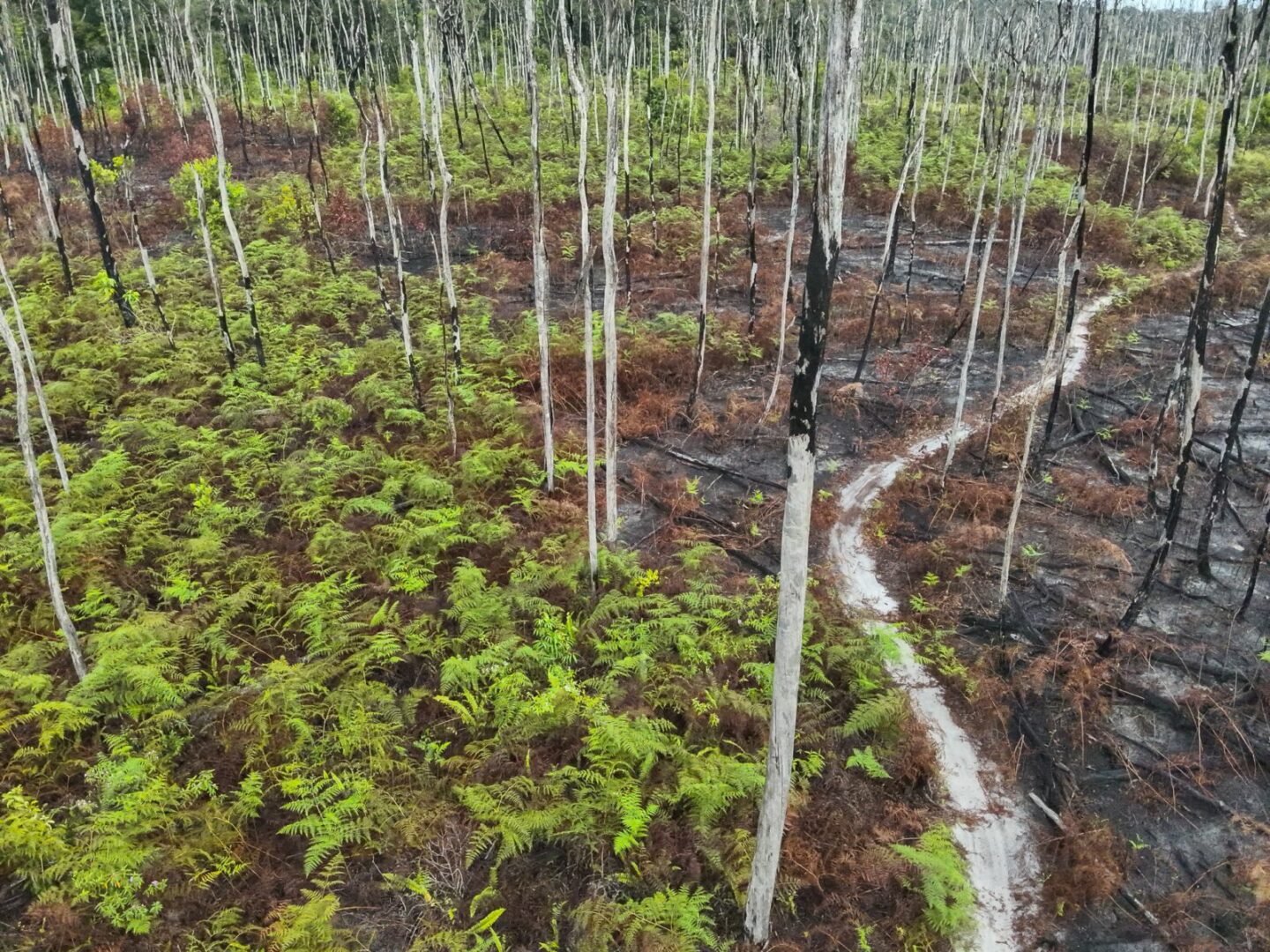
Photo 1: The planting site from above. Photo 2: Ferns grow among burnt trees, obstructing natural forest recovery. We improve this process by planting trees manually..
In the village of Petuk Baronai a new oil palm plantation threatened to be established in the (partly) burnt down forest of more than 400 hectares. But the local community saw a different kind of future ahead of them. They want to dedicate themselves to restoring the rain forest, in such a way they will be able to make a living from it.
At Trees for All we are happy to contribute. Partly owing to the support of The Flower Farm we were able to set the community on their way to forest restoration within their own Petuk Baronai Community Forest!
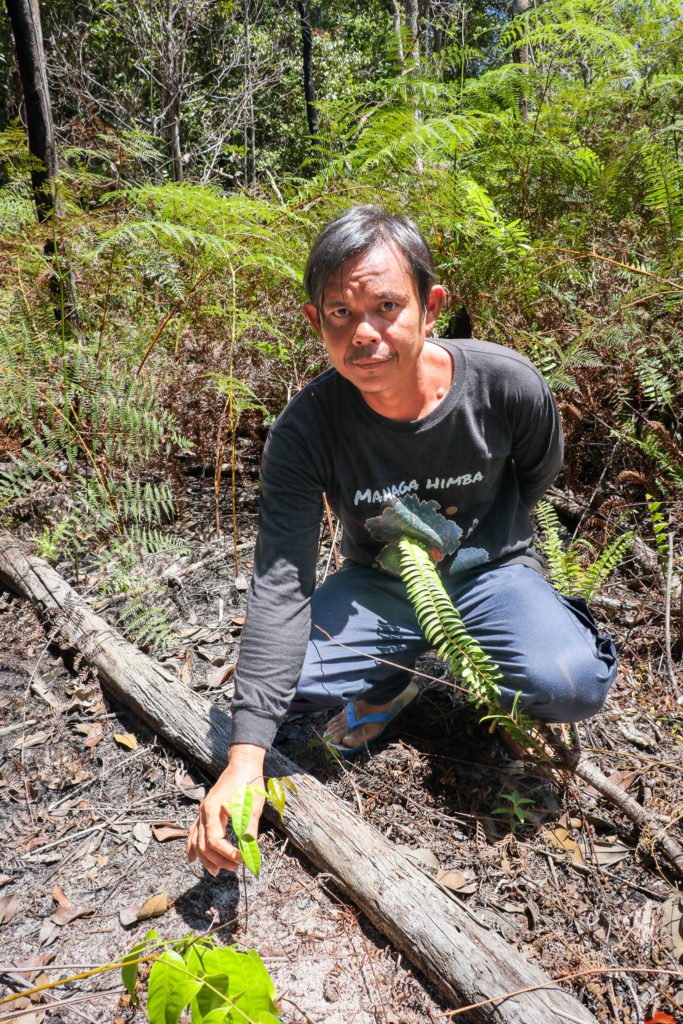
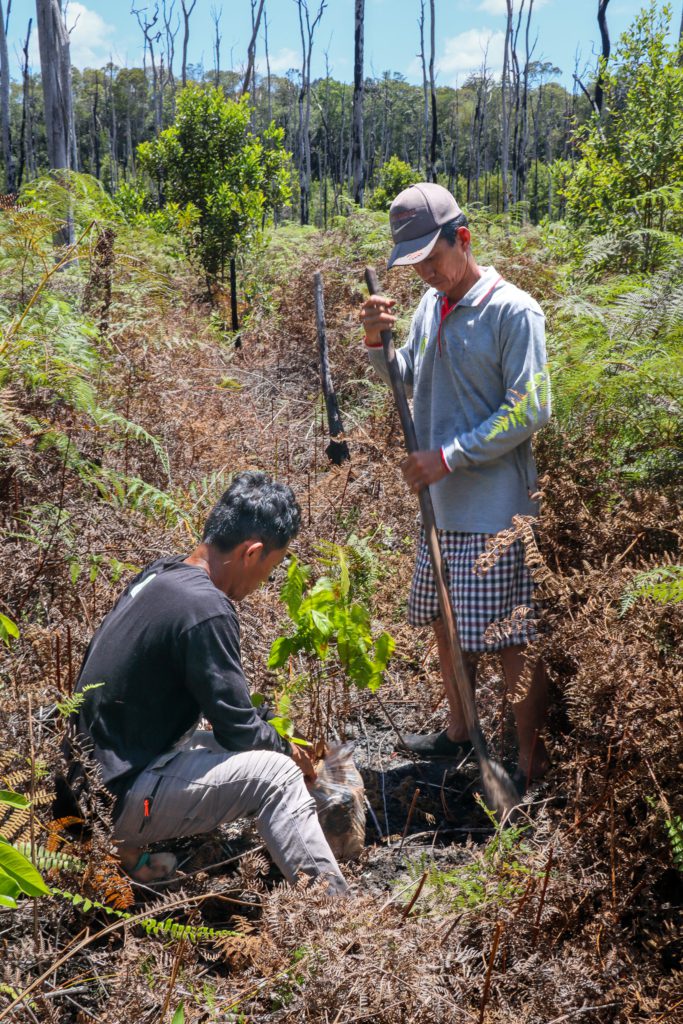
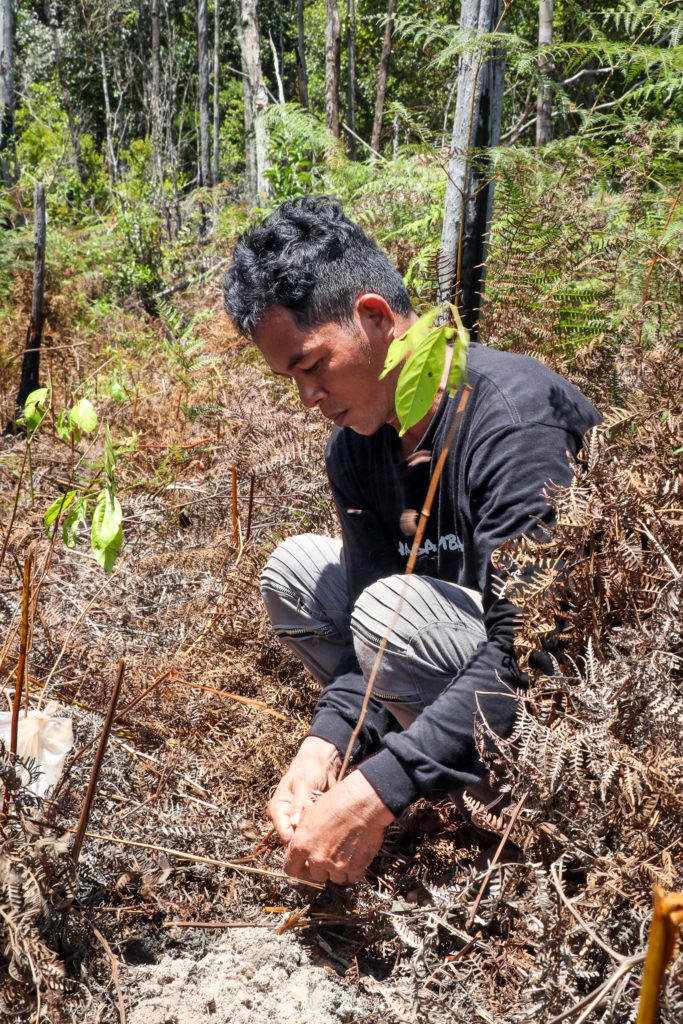
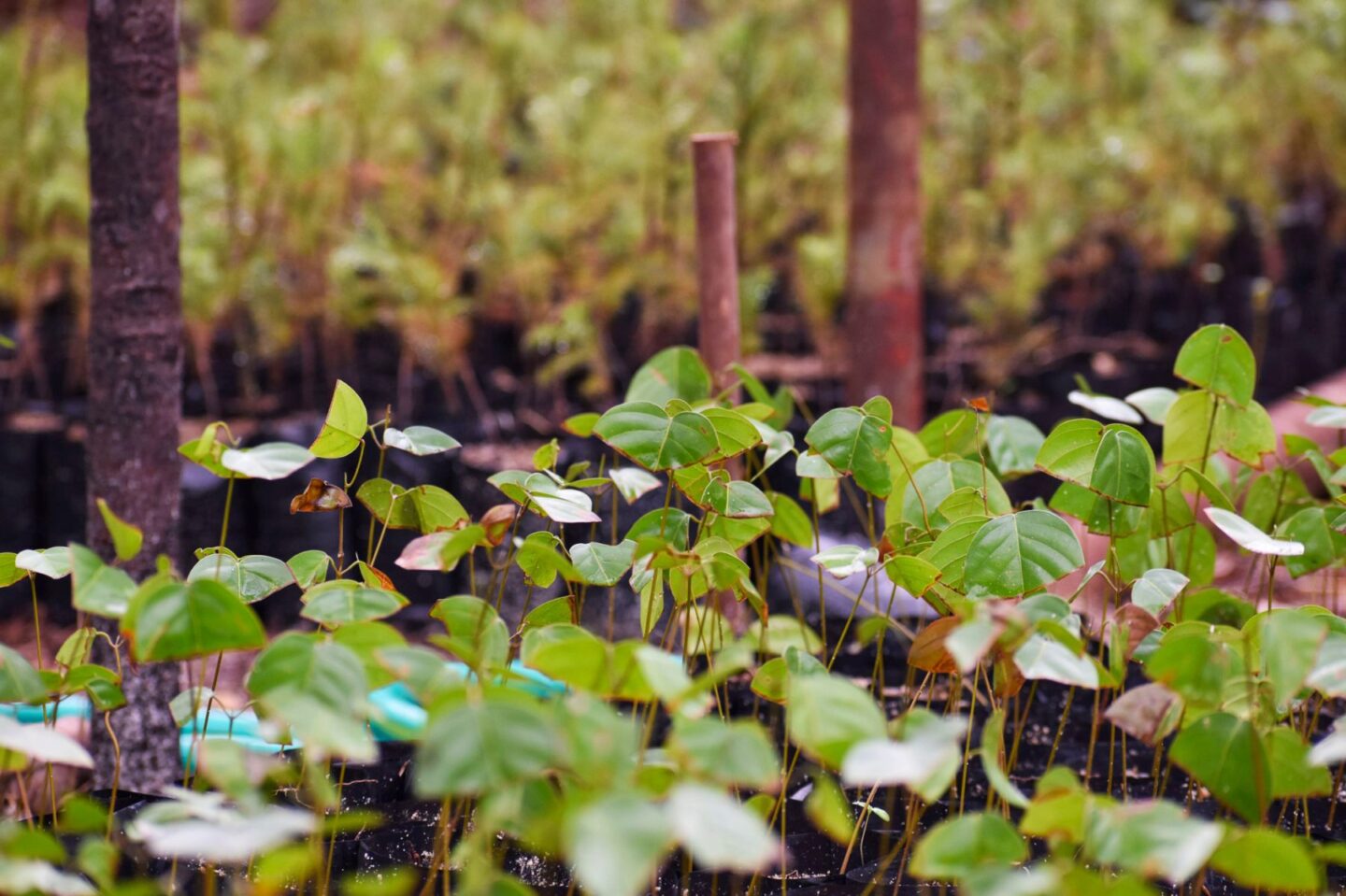
The trees are still tiny: it is almost impossible to imagine them forming a dense rain forest in a number of years!
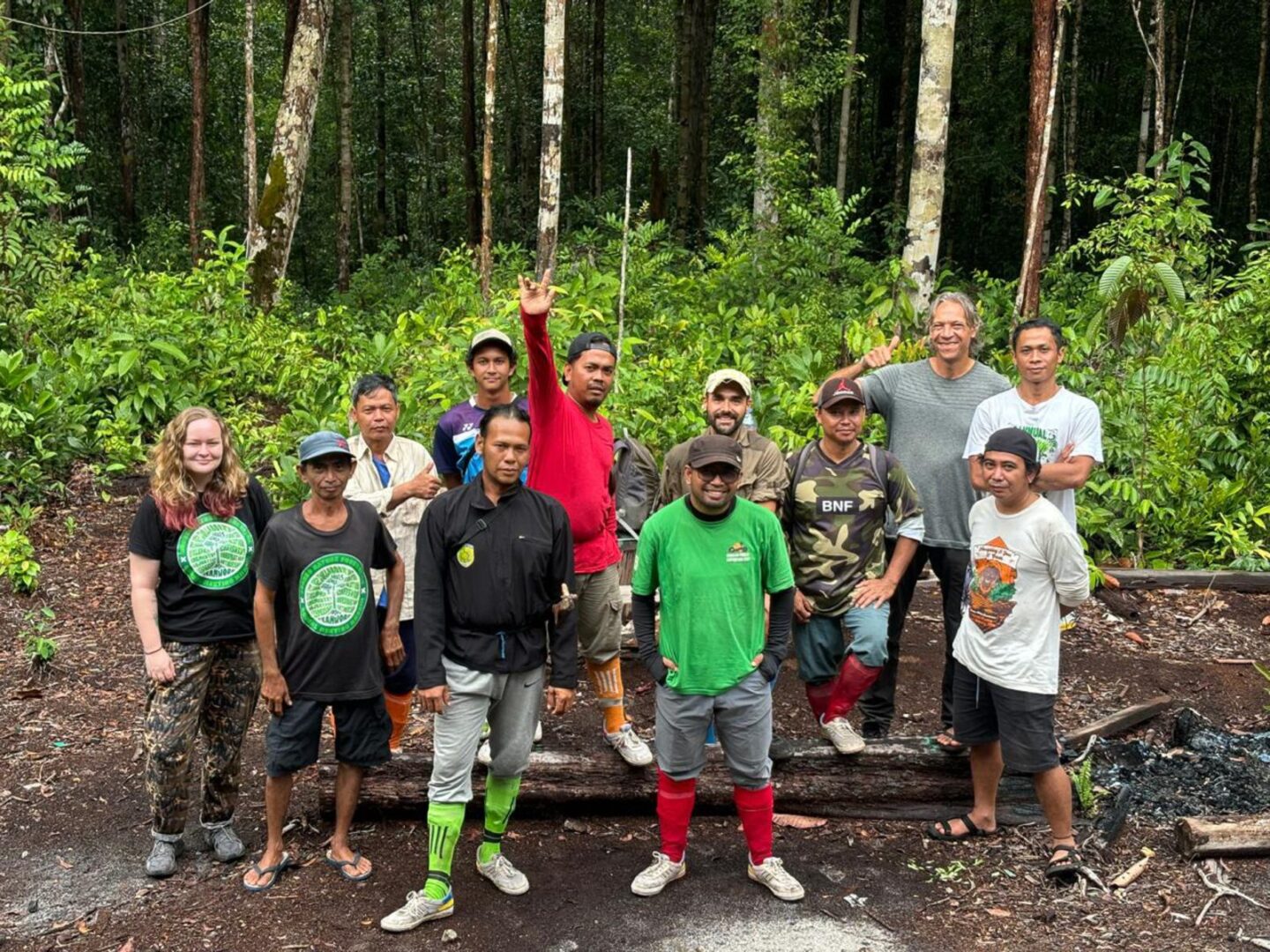
The local team in Borneo has planted 20,000 trees in a couple of months, all by hand!
These are species which are natural to Borneo. They include trees to provide food and income later on. Think of legumes, jackfruit or fruit, such as durian.
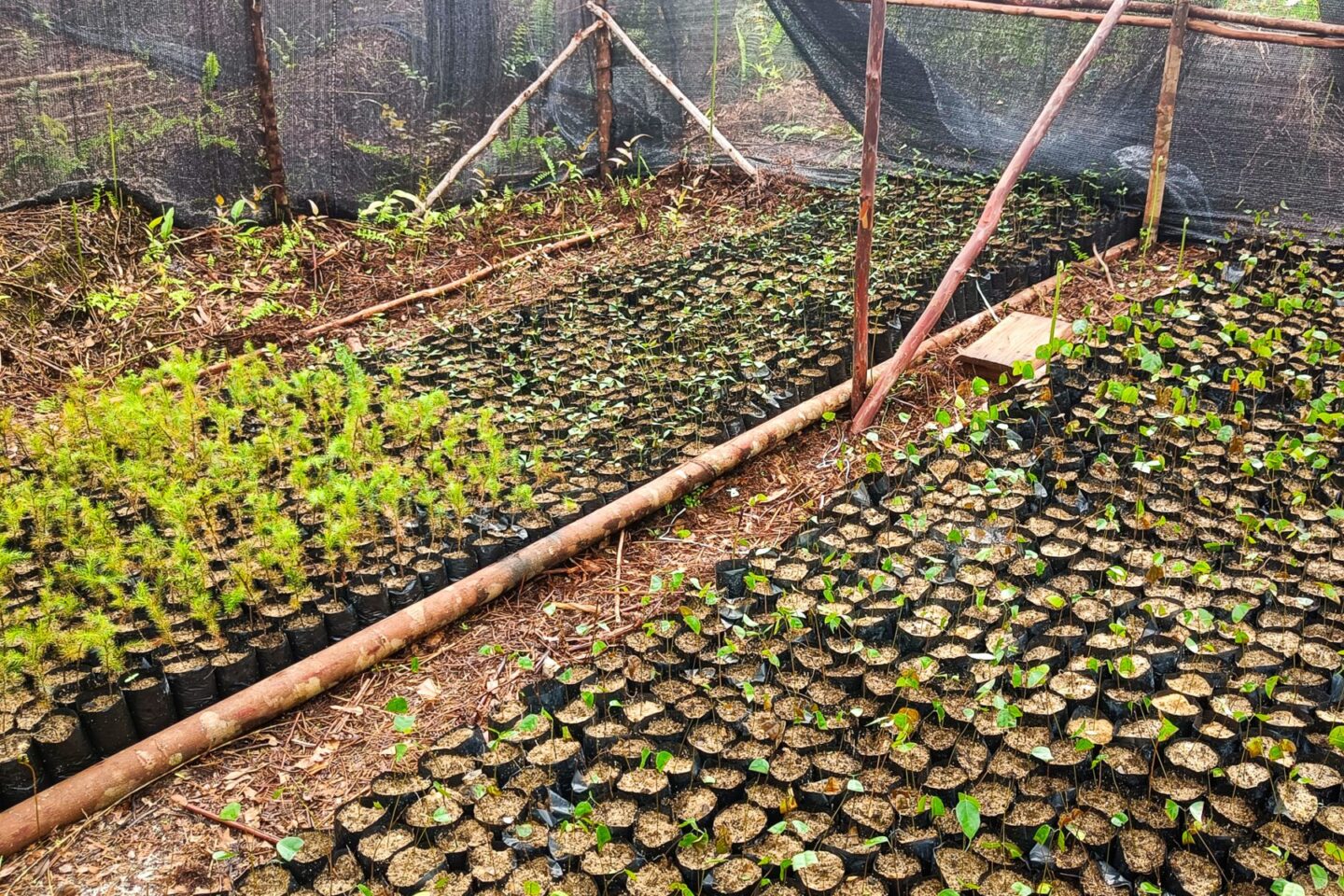
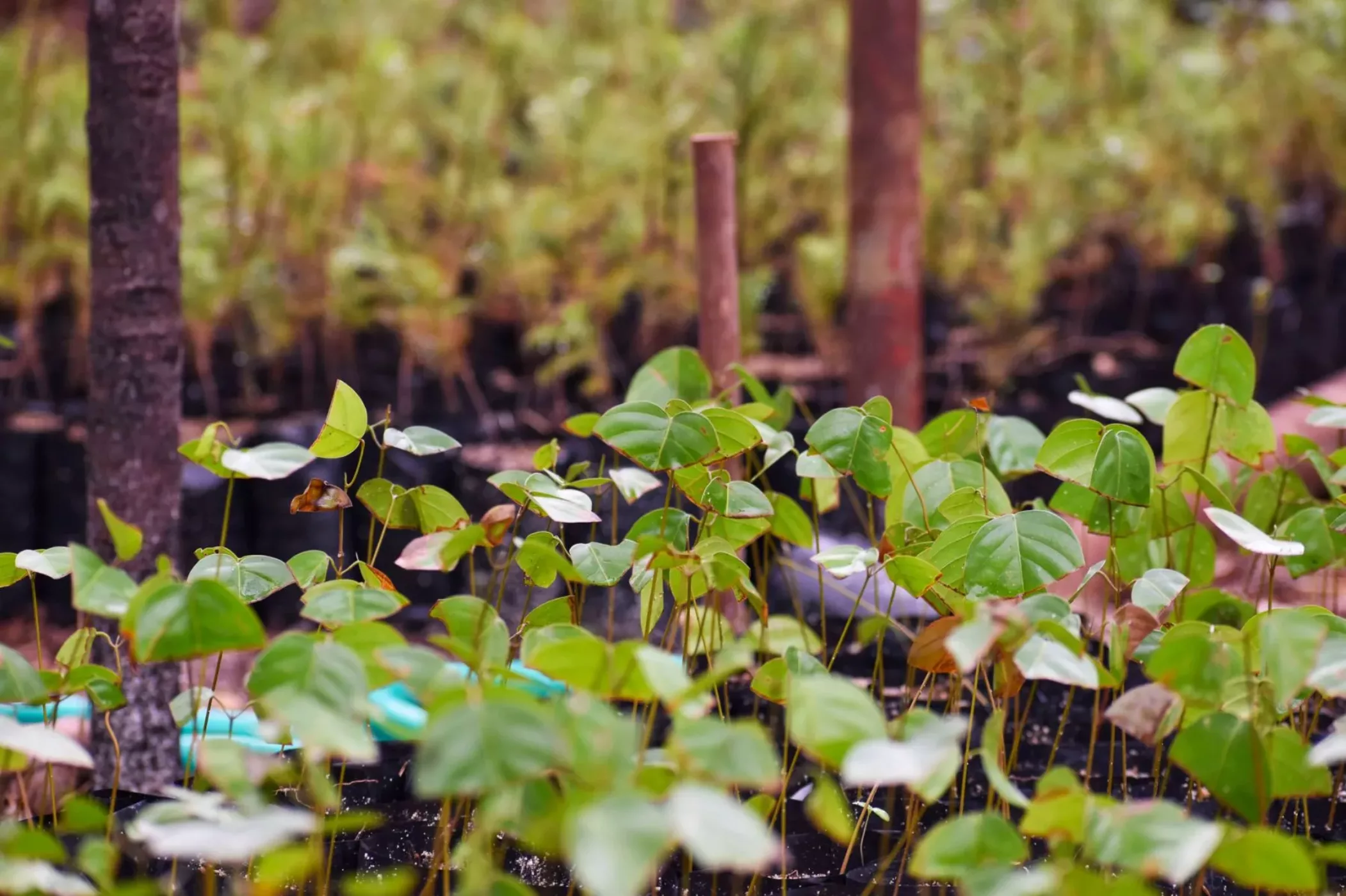
Before the young trees could be planted, they grew in a local nursery for some months.
After that, the trees were transported to the panting sites. Quite a logistic challenge, requiring the team to cross a river. At high tide, they did so by boat and a t low tide on motorcycles. Thanks to this flexible approach, the baby trees arrived safely in the planting sites.
In the meantime, the 20,000 young trees are in the ground. They are now two or three feet high. In the next few years they will grow into a dense forest thanks to good management and protection by the local community.
In the local nursery seeds grow into baby trees which can be planted.
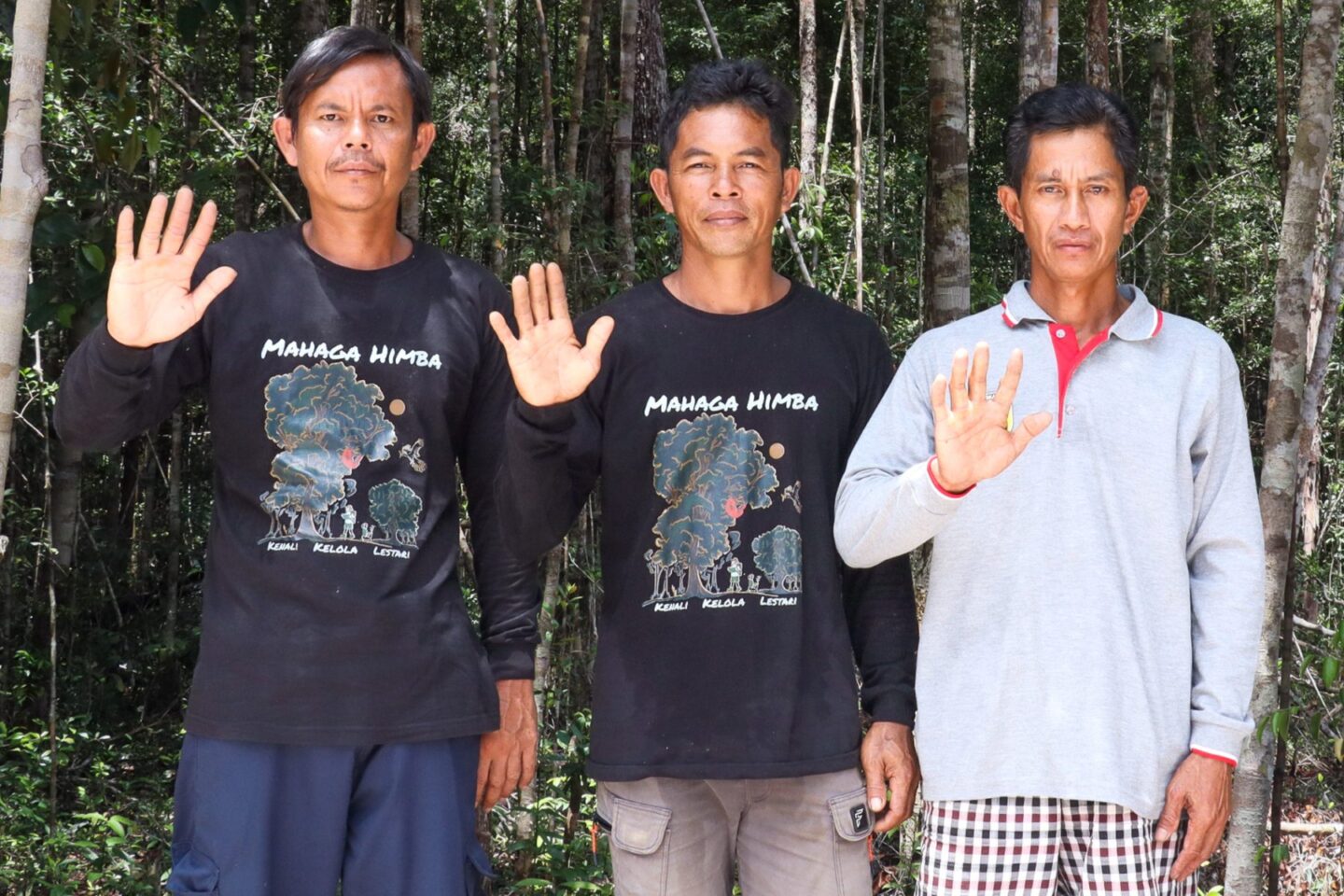
The community at Petuk Berunai do the planting, management and protection of the forest themselves. That is this forest restoration project’s power. The forest will harbor trees which produce food: from legumes and jackfruit to fruit, such as durian. The local people can either consume these products or trade them. In this way, the forest supplies them with extra work and income.
Thus, this approach does not only create more nature, but also better living conditions for the people around here. That reinforces their motivation to protect the forest in the long term.
Furthermore, the local team and Borneo Nature Foundation closely monitor the way the young trees grow. Besides that, patrol teams scan the area for fires and illegal activities. In this way, the trees may grow step by step into a full-size forest.
We can realize this forest restoration project in Borneo also thanks to support by The Flower Farm. This sustainable brand is well-known because of their palm oil free products to protect rain forests. Additionally, The Flower Farm wanted to make it possible to plant new rain forest, in cooperation with their consumers. We would like to thank everyone who has contributed to this project.
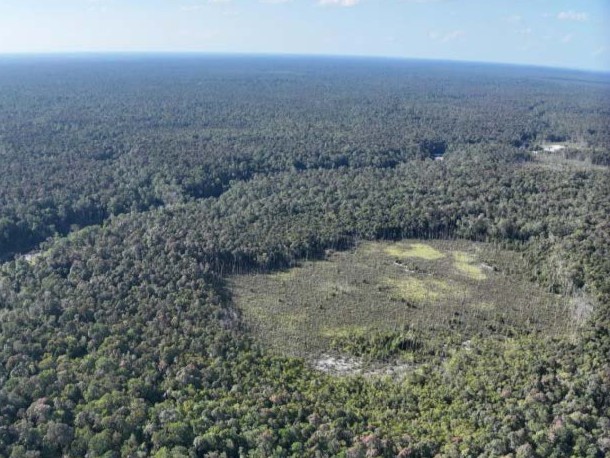
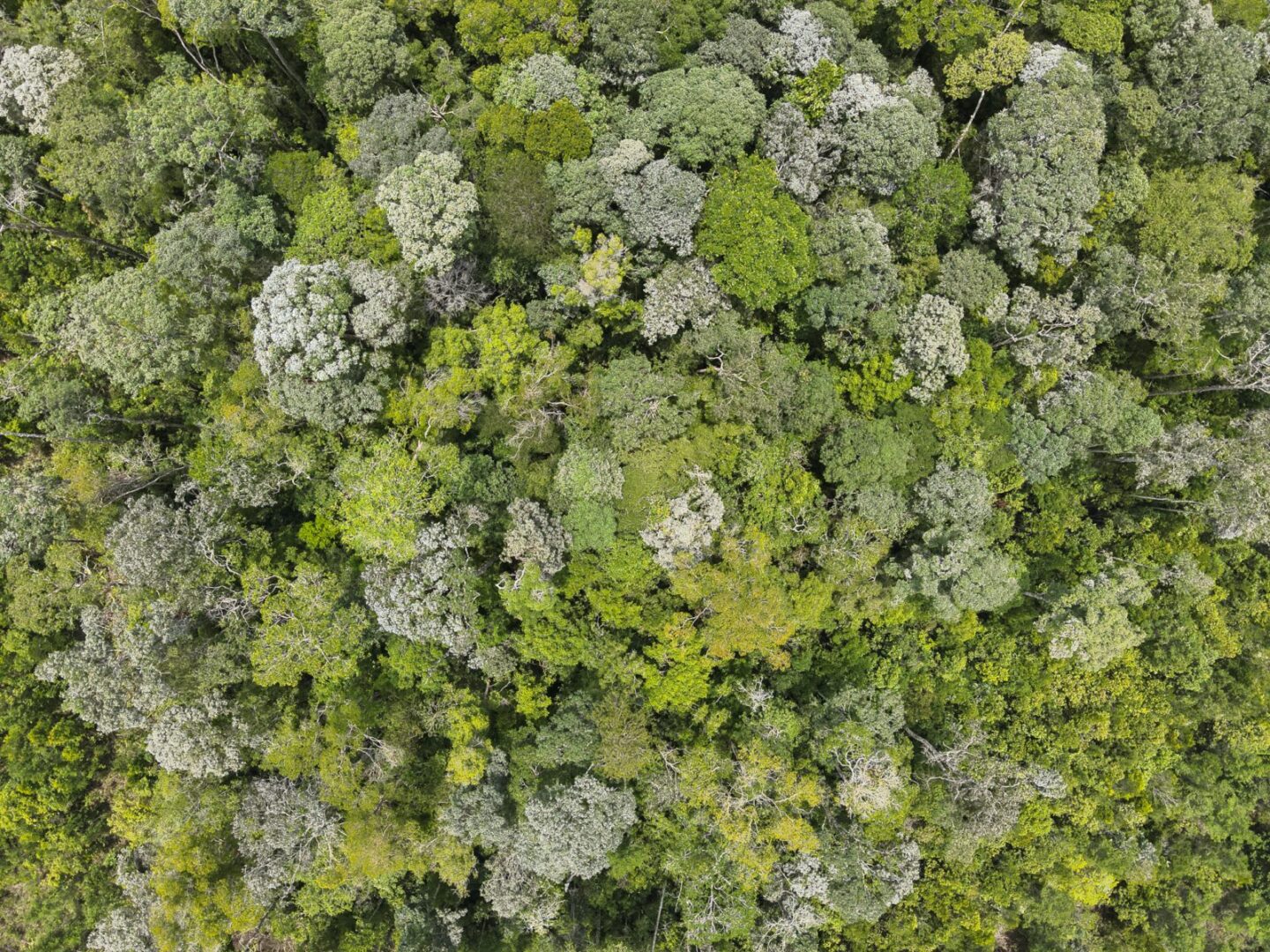
It is almost impossible to imagine today, but in the future the rain forest will look just like this present-day forest!